Ecommerce Website Redesign
Jently
Redesigning a telehealth site to feel like a simple, trustworthy ecommerce experience
Jently is a telehealth company offering treatments for weight loss, testosterone, hair regrowth, and sexual health.
Role
Web / UX Designer
Team
1 Designer, 1 PM, 1 Developer, 1 Copywriter
Tools
Figma, FigJam
Timeline
Apr 2025 — Jun 2025
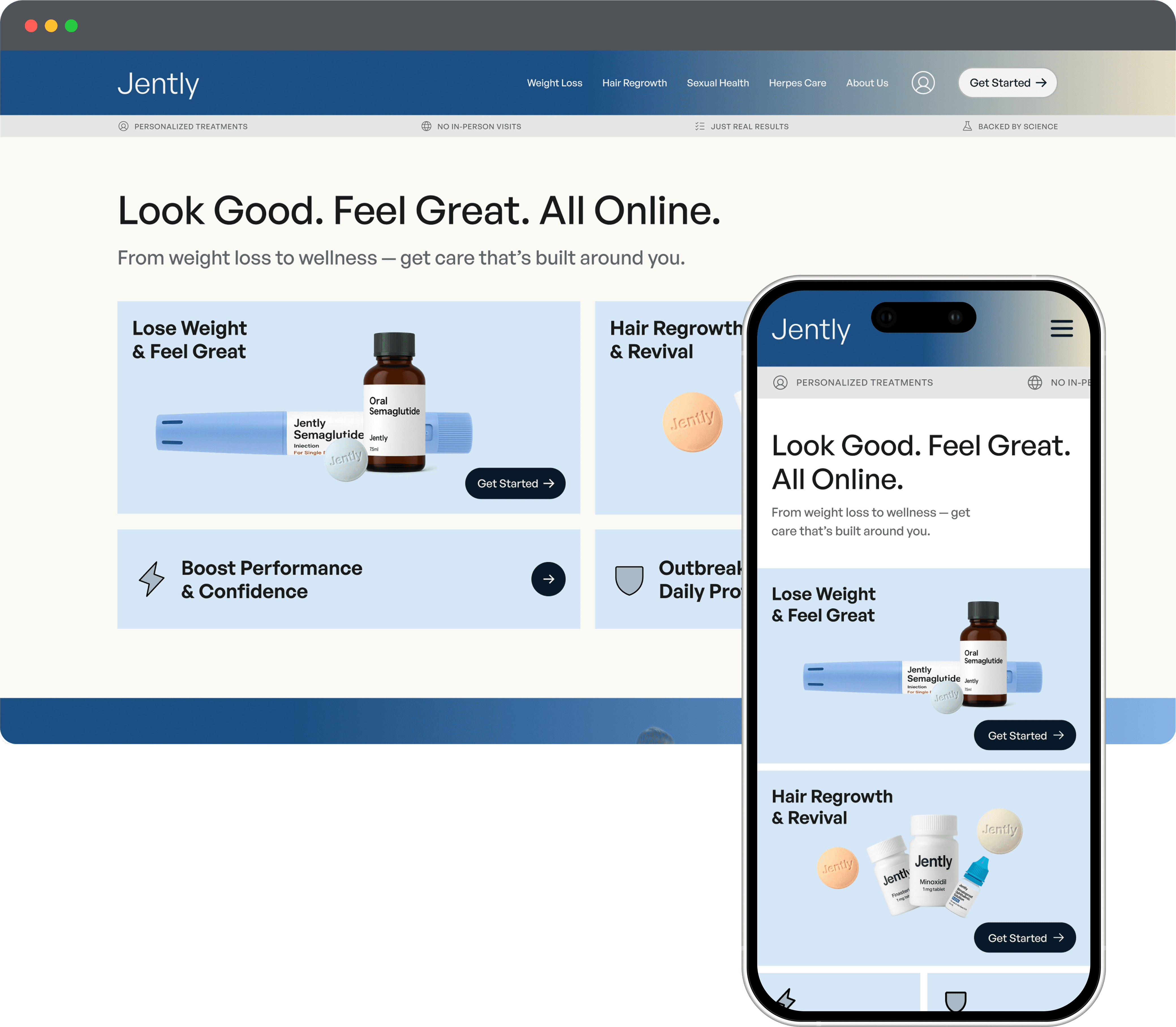
Final homepage and mobile layout
Overview
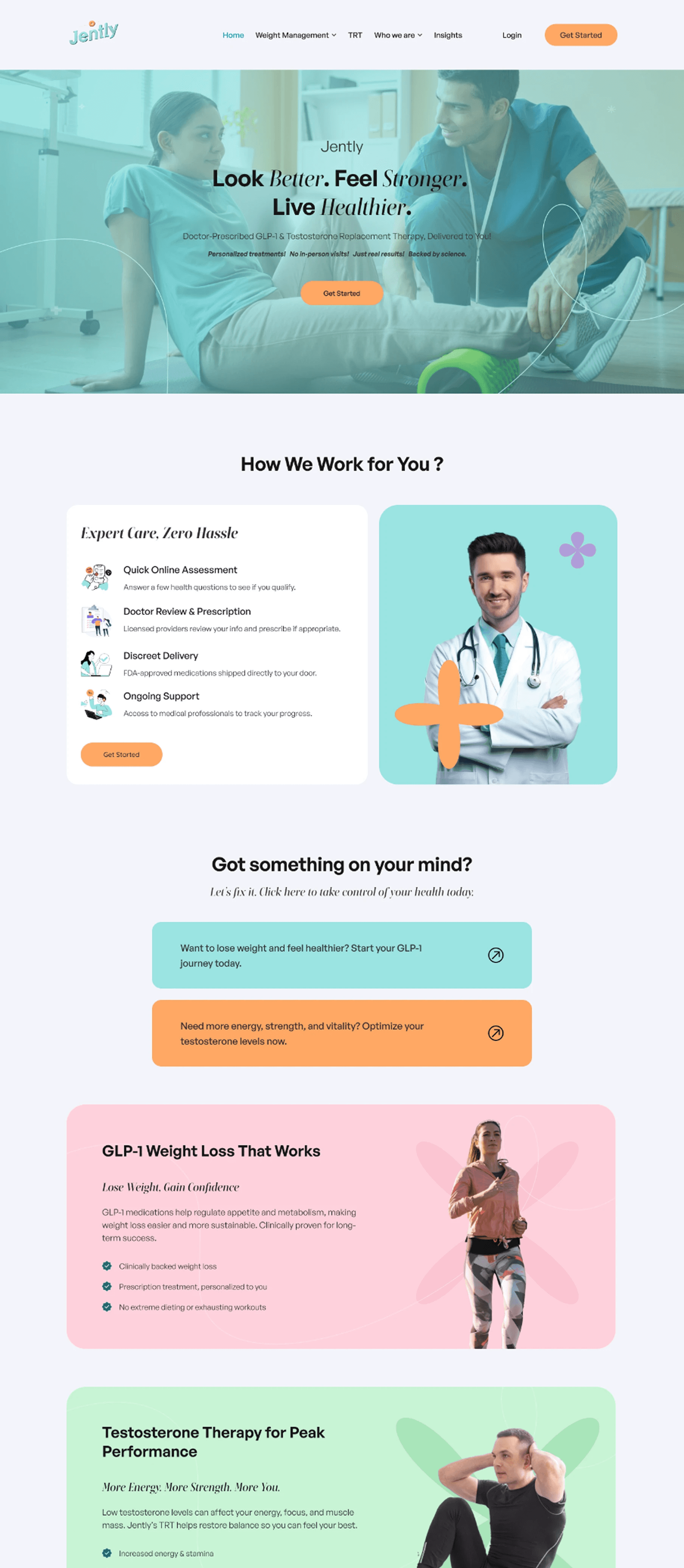
Jently's original website design was colorful, inconsistent, and didn’t follow the ecommerce patterns users expect when comparing treatments. It also didn’t line up with the clean, clinical brand direction the founder wanted.
My job was to redesign the site with a calmer visual system, clearer hierarchy, and a layout that made it easier for users to move through the core four categories.
My Role
Redesigned the homepage, categories, and product pages
Updated hero sections and mobile layouts
Simplified structure and hierarchy
Set spacing, color, and type rules
Organized assets and cleaned the Figma file for developers
Problem
The original designs had issues that made the site feel untrustworthy and unclear
Inconsistent bright colors
Long text blocks hiding key info
No clear entry points into the four treatment categories
Weak hierarchy and CTAs
Messy, hard-to-follow Figma file
“If we ship this version, users will not understand what we offer or feel confident buying.”
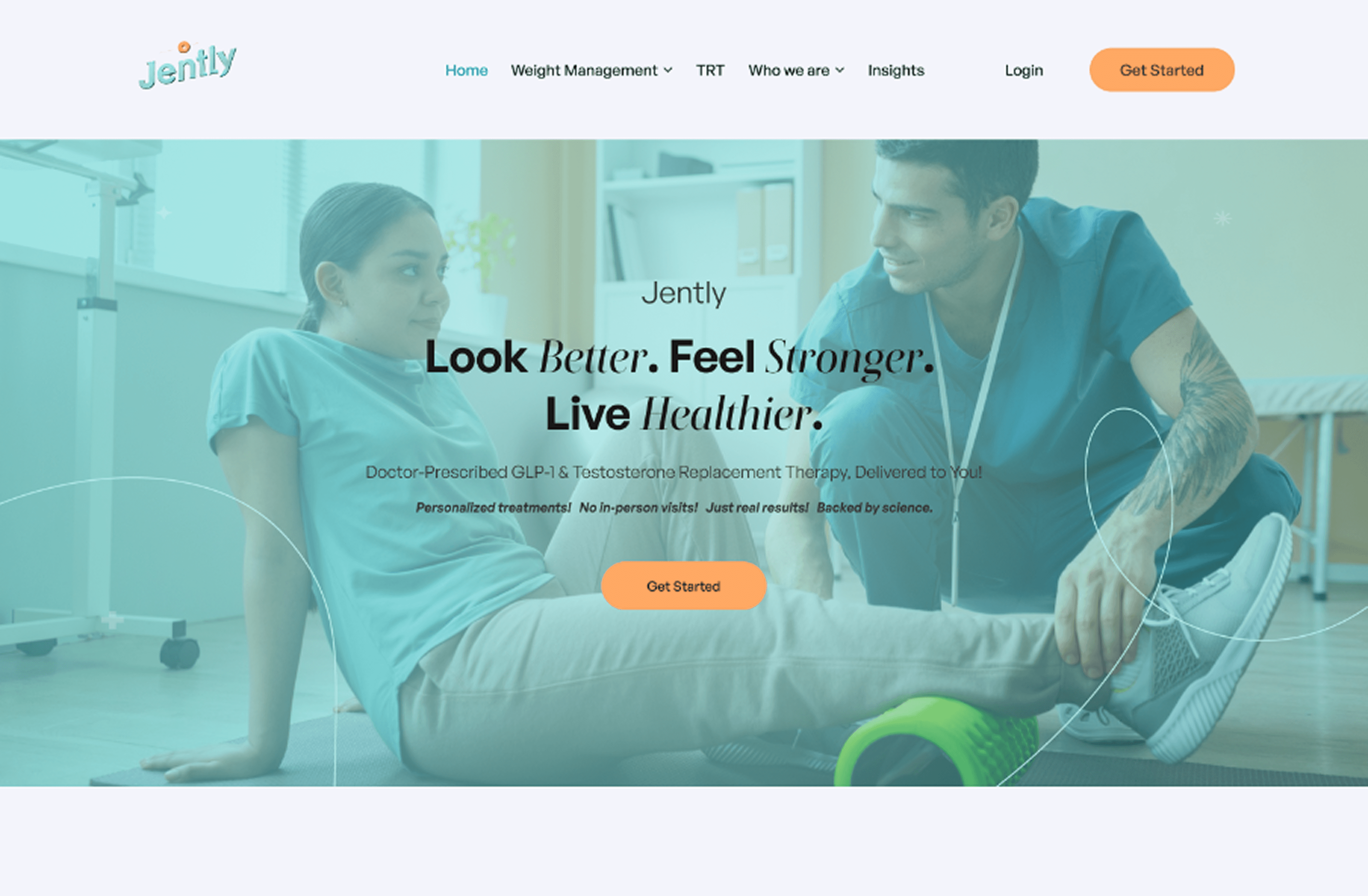
Original homepage before redesign
Key Improvements
Neutral visual direction
I replaced the bright palette with calm grays, soft blues, and more white space. This made the site feel more clinical and improved perceived trust.


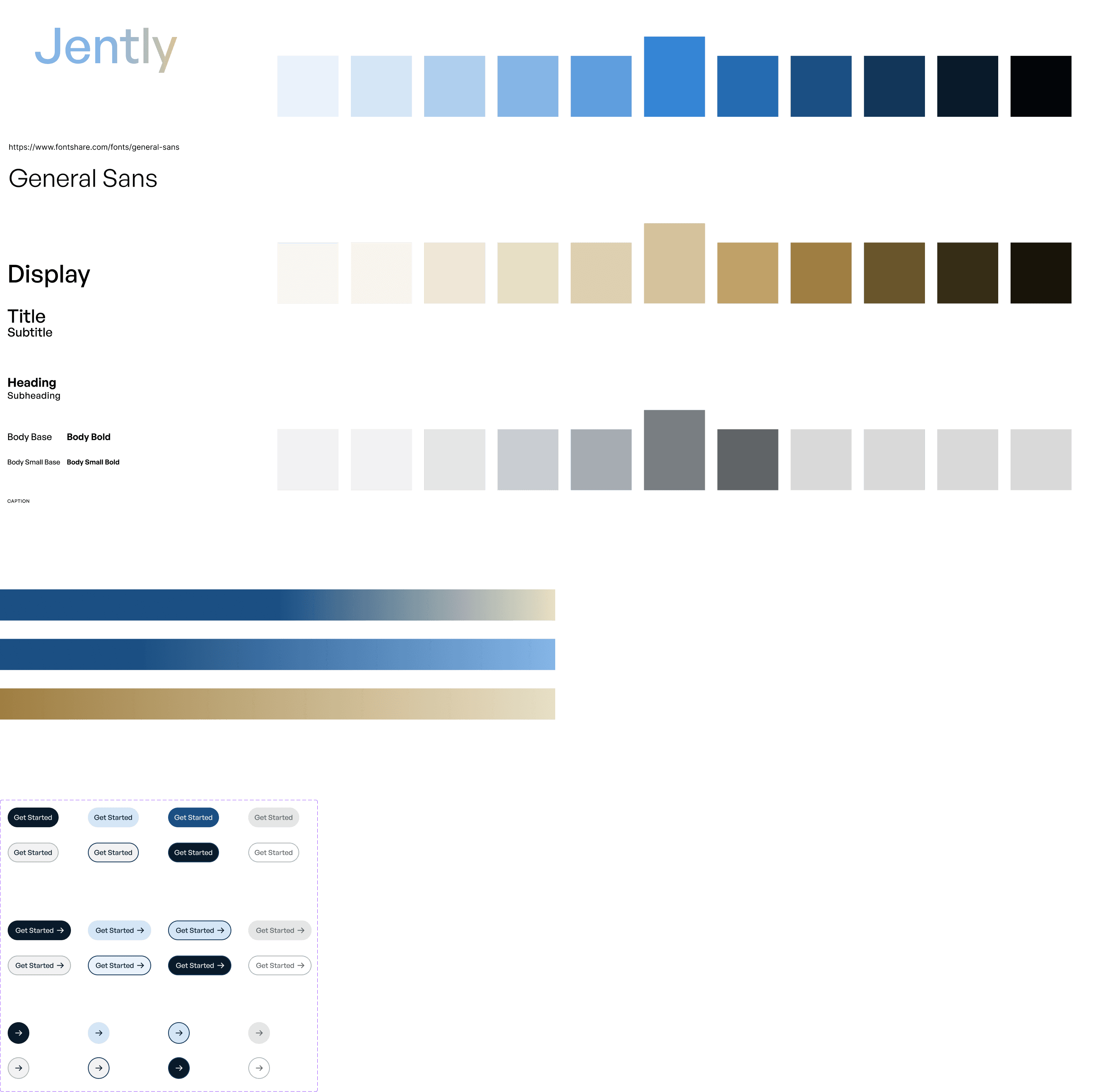
Style guide for consistency
I created a simple style guide that defined typography, spacing, color usage, and reusable components like buttons and product cards. This made the visuals consistent across pages and gave developers clear patterns to build from.
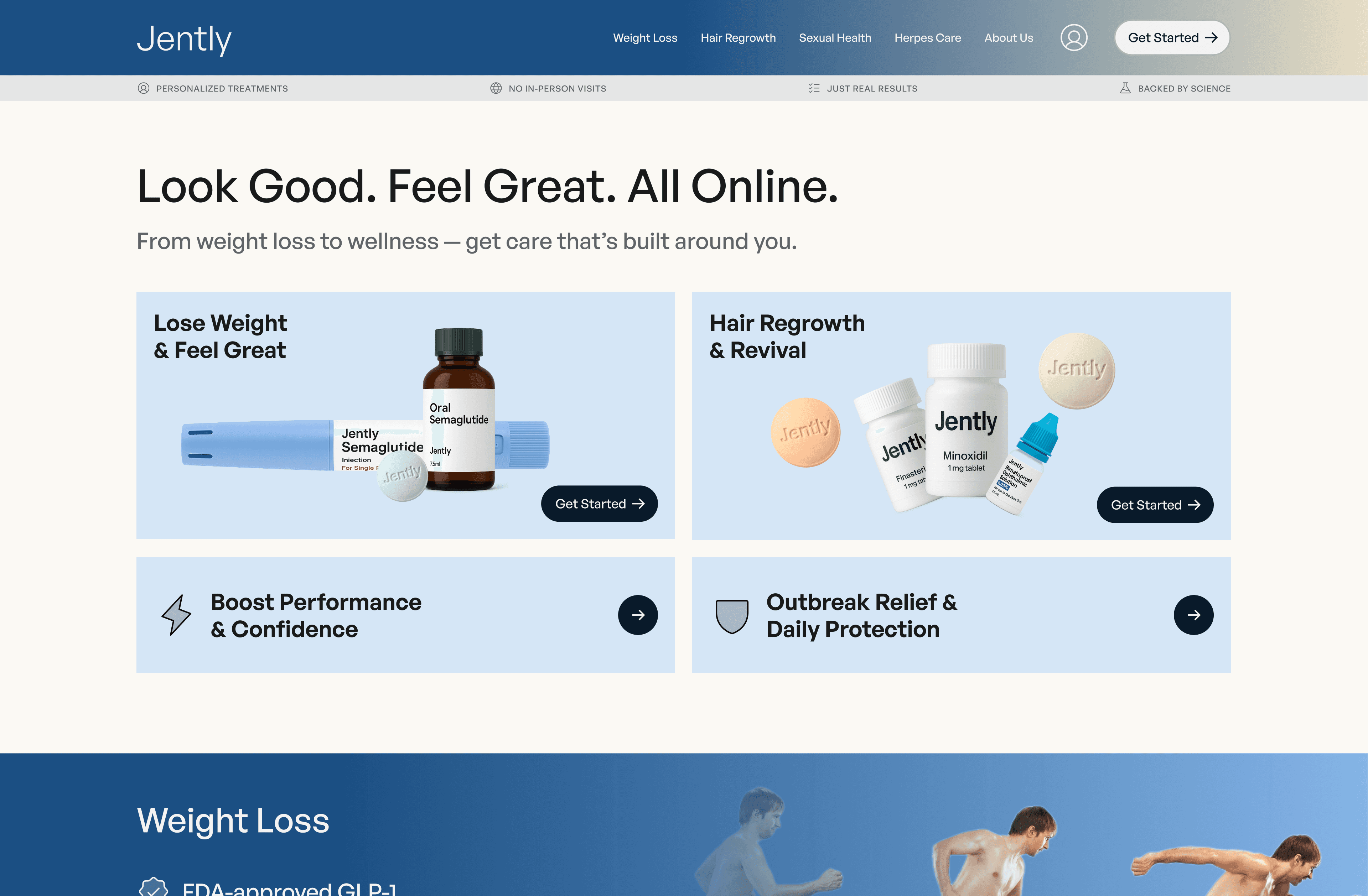
Clear ecommerce-style homepage
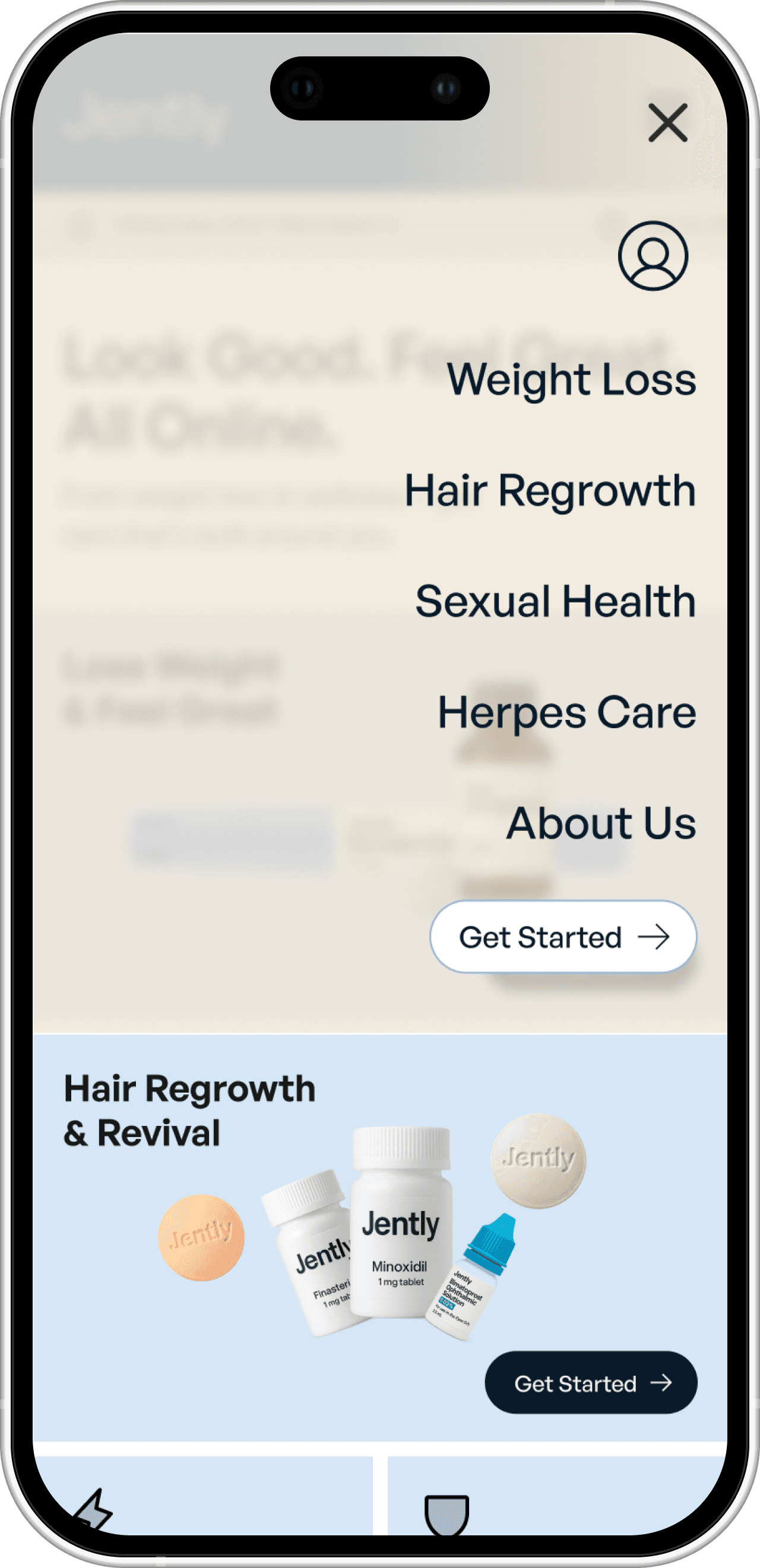
Users expect category entry points first. I redesigned the homepage so the four treatments appear at the top as large tiles. Below that, I added simple supporting sections and clearer CTAs.
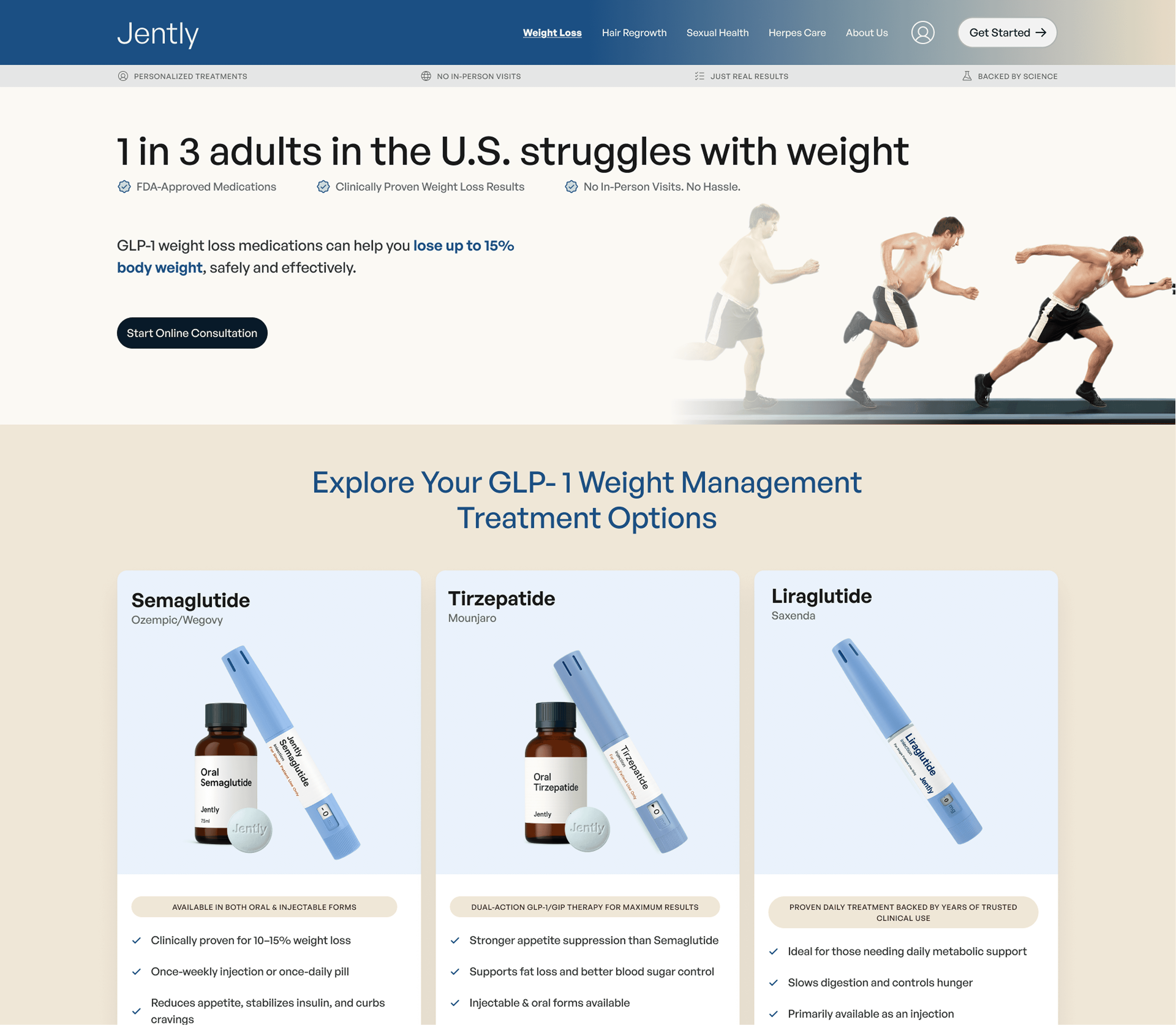
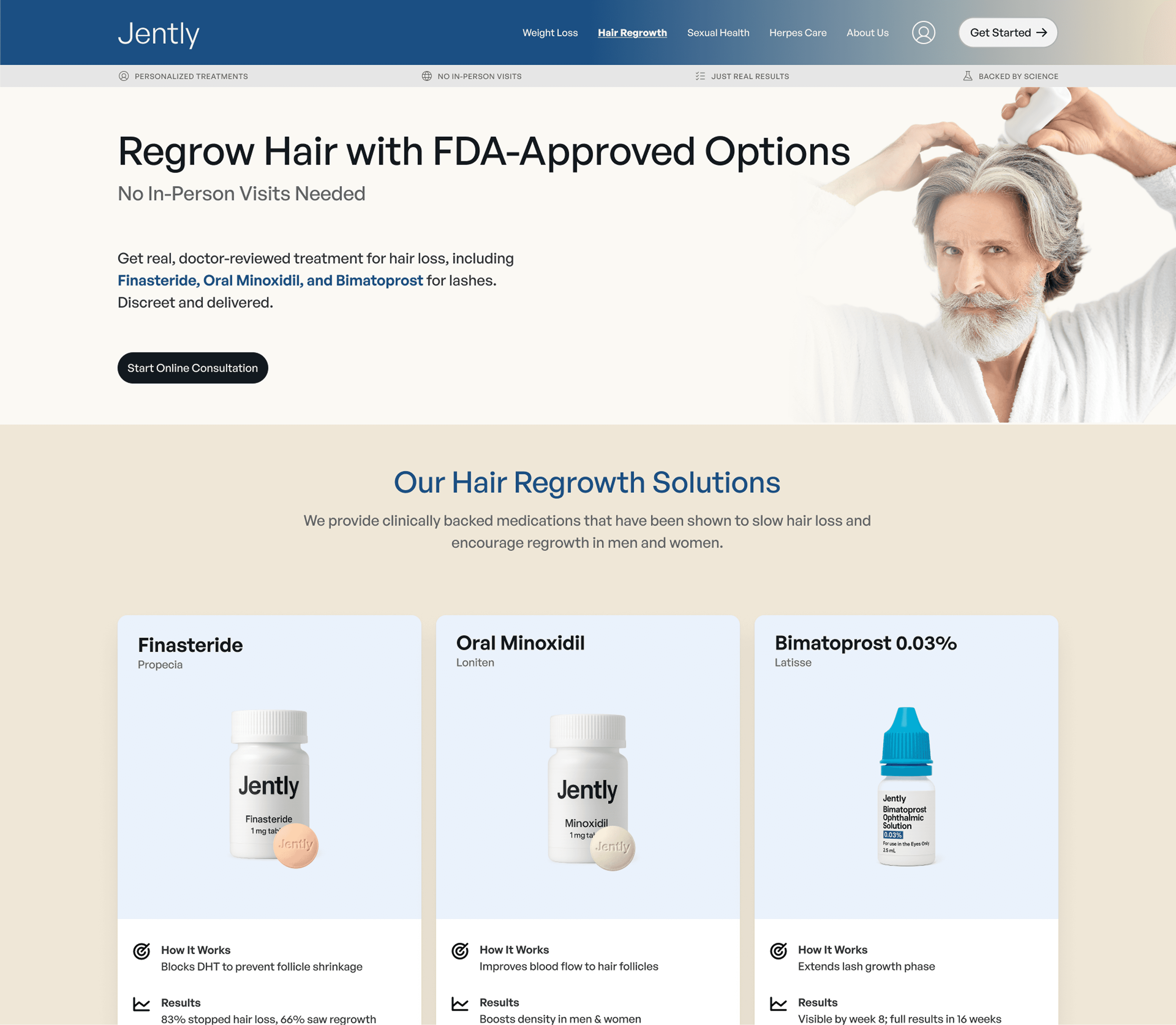
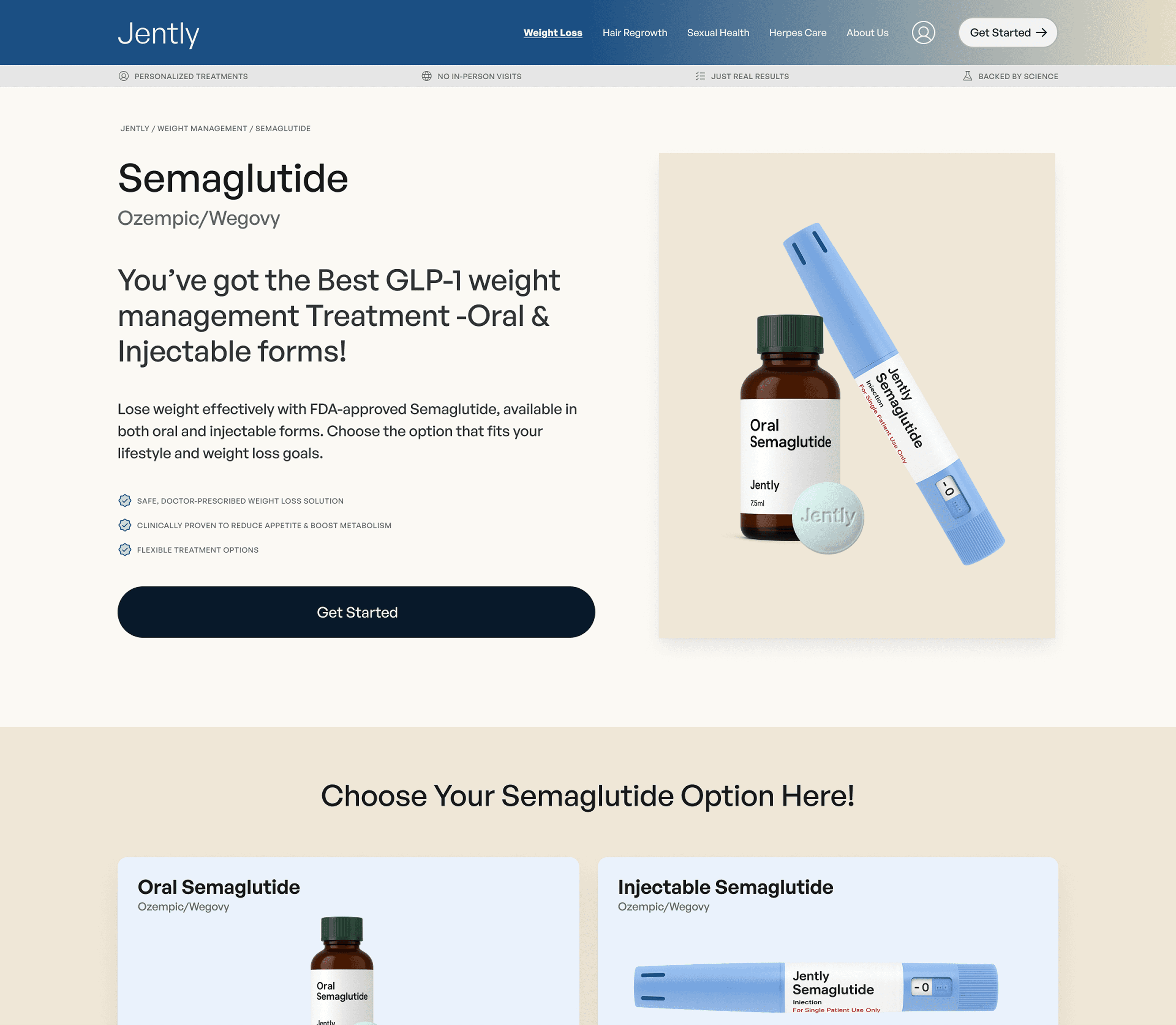
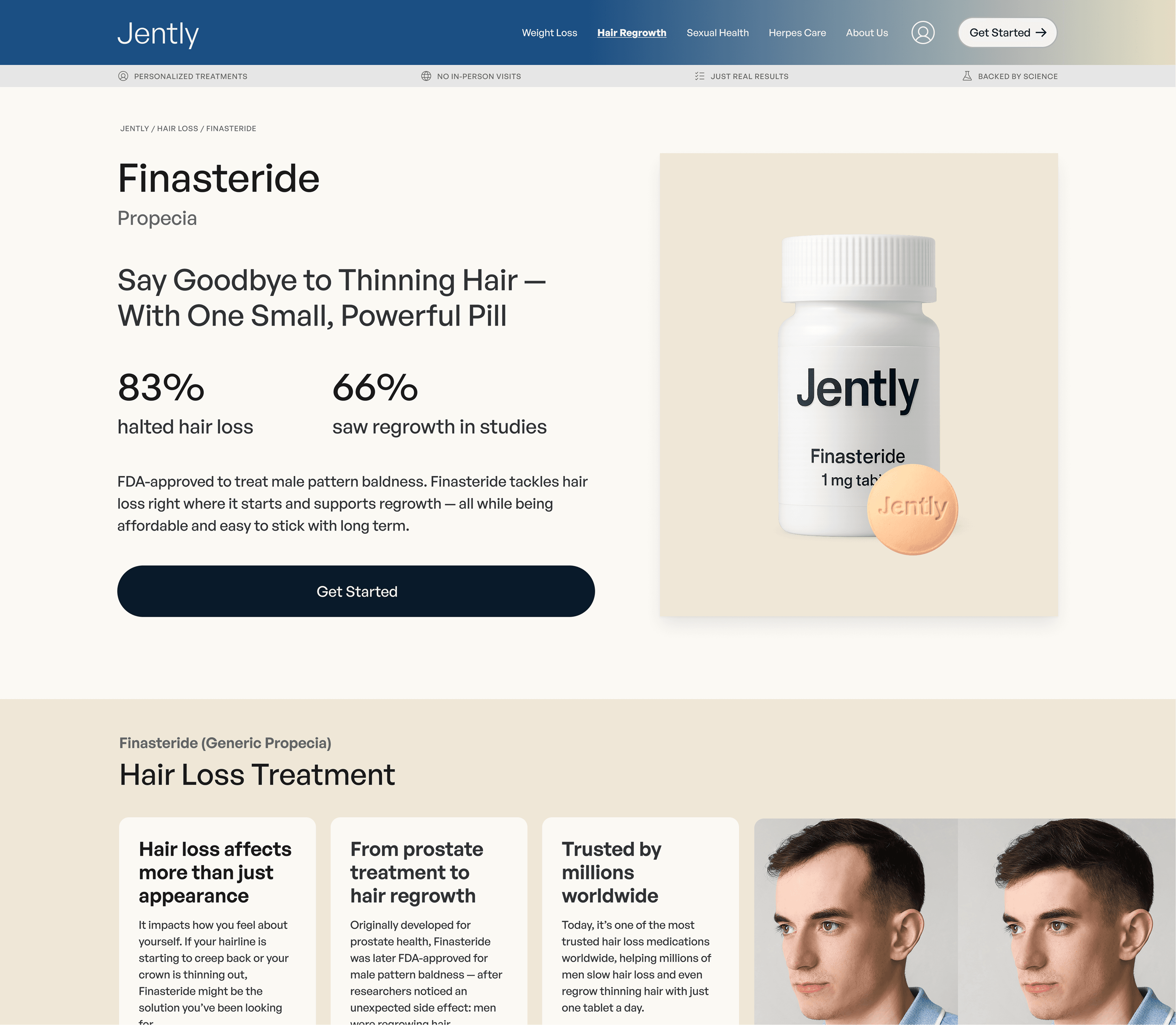
Simpler structure for categories and products
Each category and product page now follows the same pattern:
benefits
dosage info
comparison blocks
simple visuals
consistent spacing and type
clean CTA placement
The consistency lowered the cognitive load and made scanning easier.
Developer-friendly handoff
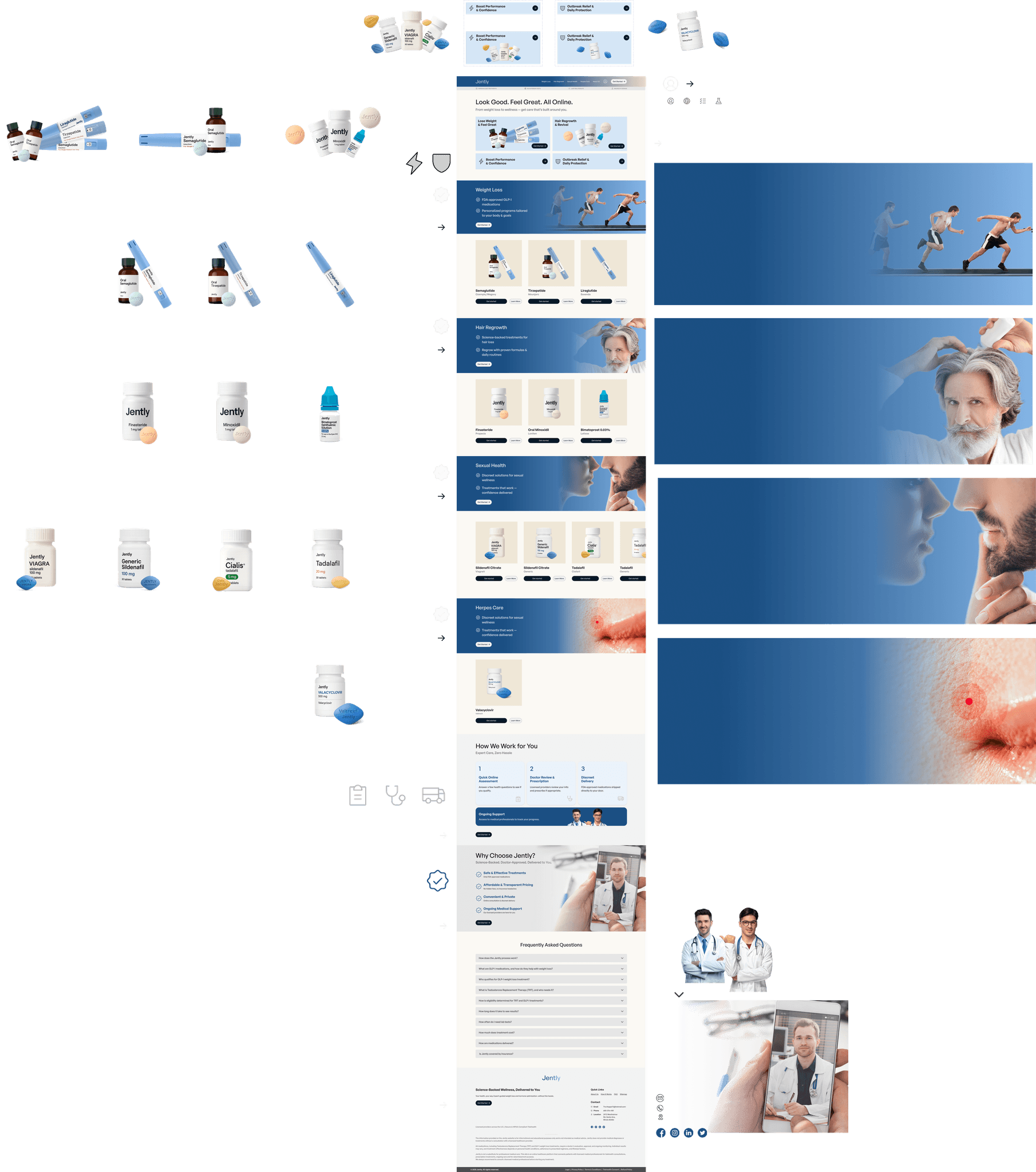
I organized layers, grouped components, labeled sections, and prepared all assets. The developers told me the structured file made the build smoother with fewer clarifying questions.
Mobile and Responsiveness
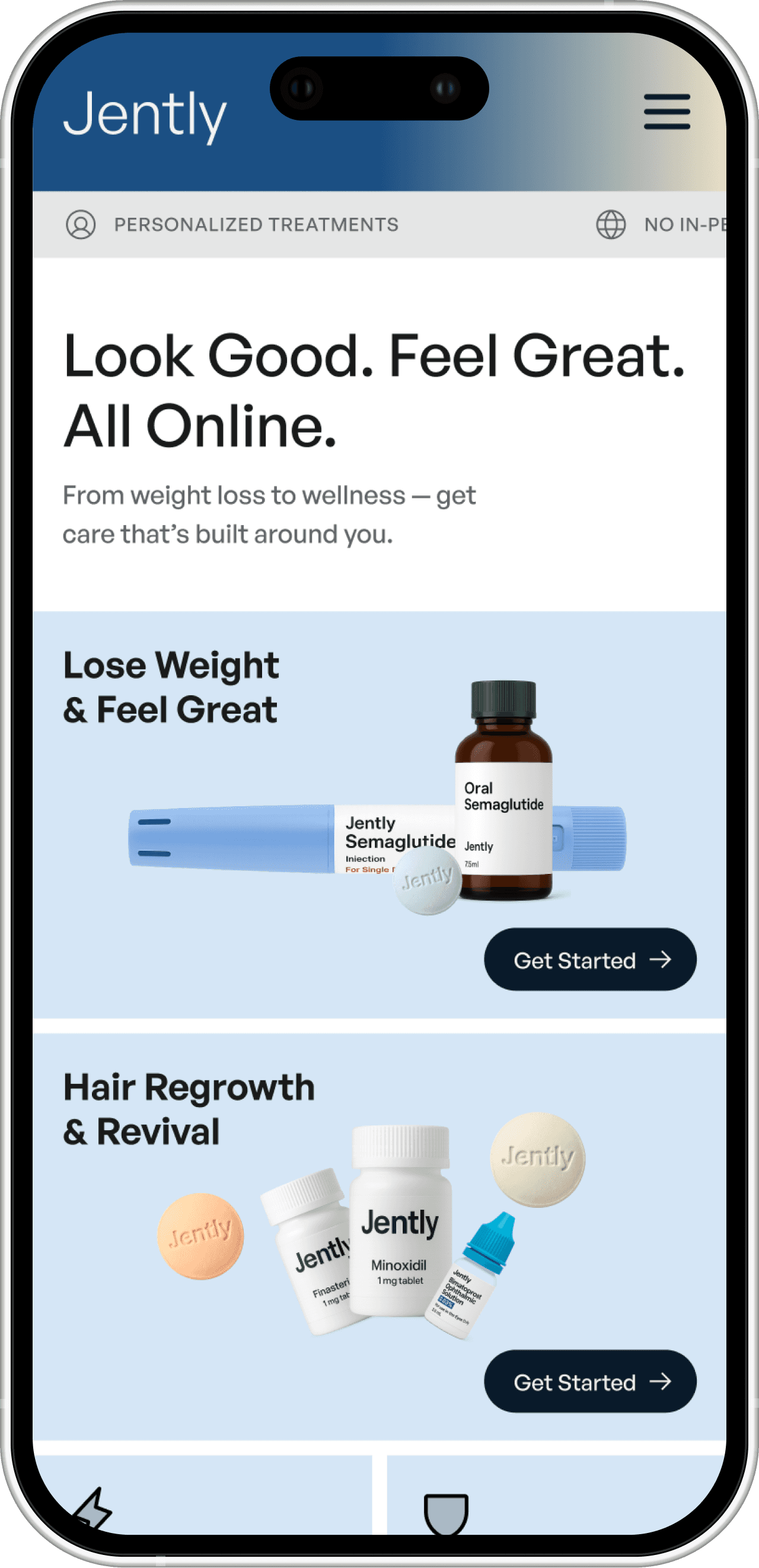
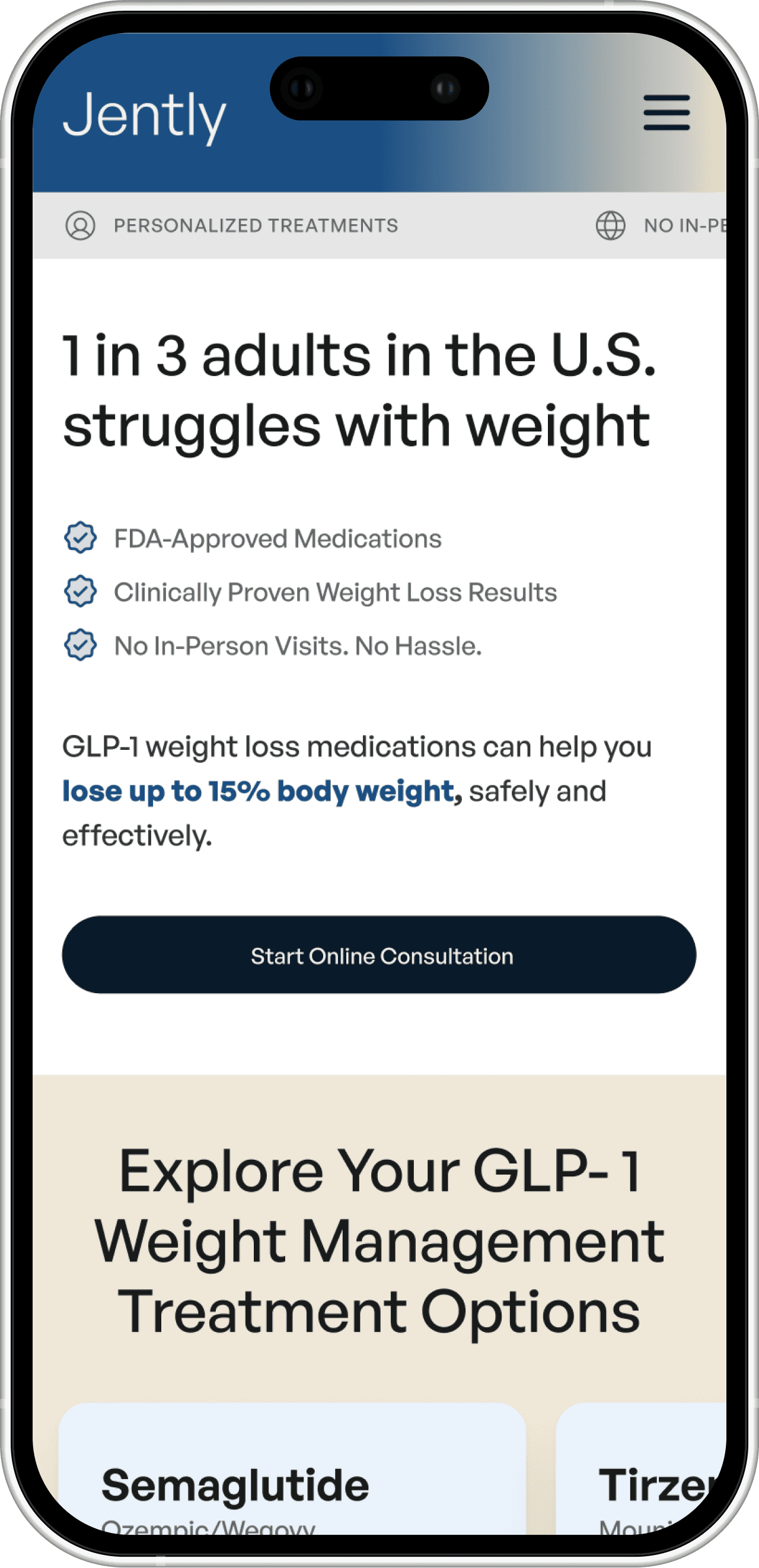
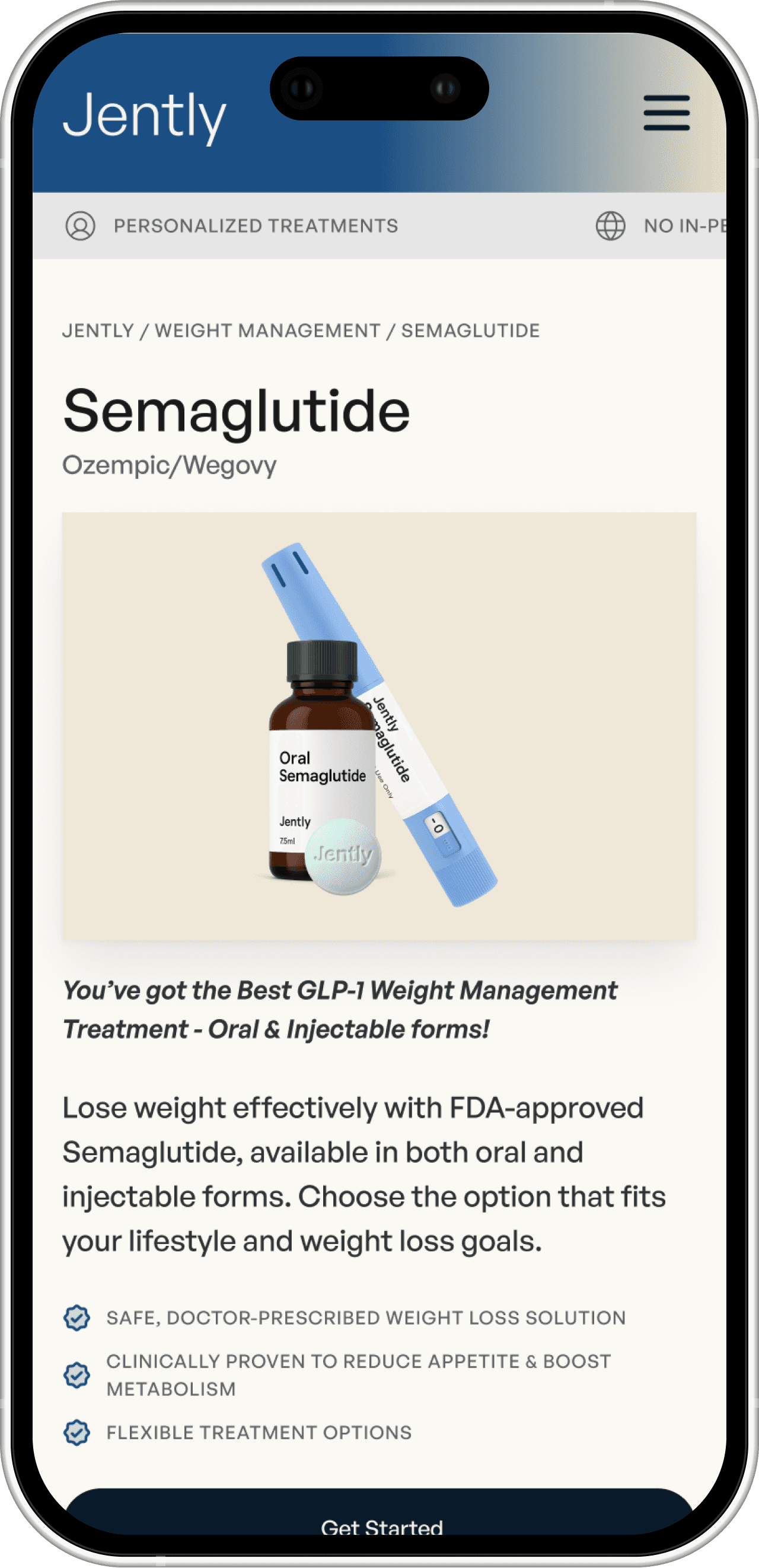
I designed the site to work seamlessly across desktop and mobile. Key pages were adapted into responsive layouts with simplified navigation, stacked sections, and touch-friendly CTAs to make the experience clear and usable on any device.
Before and After
Homepage
Redesigned with a cleaner layout, consistent branding, and category tiles that make treatments easy to find.
Category Pages
Rebuilt to focus on clarity with simple banners, treatment highlights, and straightforward navigation.
Product Pages
Standardized into a clear template with focused details, patient-friendly language, and stronger calls to action.
Outcome
The redesign gave Jently:
a calmer and more credible visual tone
a homepage built around ecommerce patterns
clearer and more consistent category and product pages
a predictable design system
a clean, easy to build Figma file
The founder said the new direction matched where he wanted the brand to go.
Developers said the organized file made implementation faster.
Reflection
This project taught me how much visual tone shapes trust in healthcare. Using calmer colors, consistent spacing, and clearer hierarchy made the website feel more credible.
It also reminded me how important file structure and naming are during handoff. Small decisions like grouping layers, labeling components, and keeping sections clean saved developers time and avoided confusion.
Thank you for reading!
Please feel free to reach out with any questions or to connect.